Tesla Targets Late 2027 for First Optimus Robot Shipments
Elon Musk has pushed back the delivery date for Tesla’s humanoid robot, citing unresolved issues with hardware, durability, and artificial intelligence.
By Giulia Liu ·
Tesla is pushing back the timeline for delivering its Optimus humanoid robots to external customers, with Elon Musk now targeting late 2027. During the company’s Q3 2026 earnings call, Musk acknowledged that significant work is still required on the robot’s hands, its overall durability, and its AI capabilities before any units can be shipped to buyers.
Musk stated that early production of Optimus has begun on a high-volume assembly line at the Fremont factory, the former production site for Model S and Model X vehicles. While most of the line, designed for a capacity of one million robots annually, is installed, reaching that production rate will take at least a year. He attributed the delay to ongoing changes in the robot's design, which prevents the line from running at full speed.
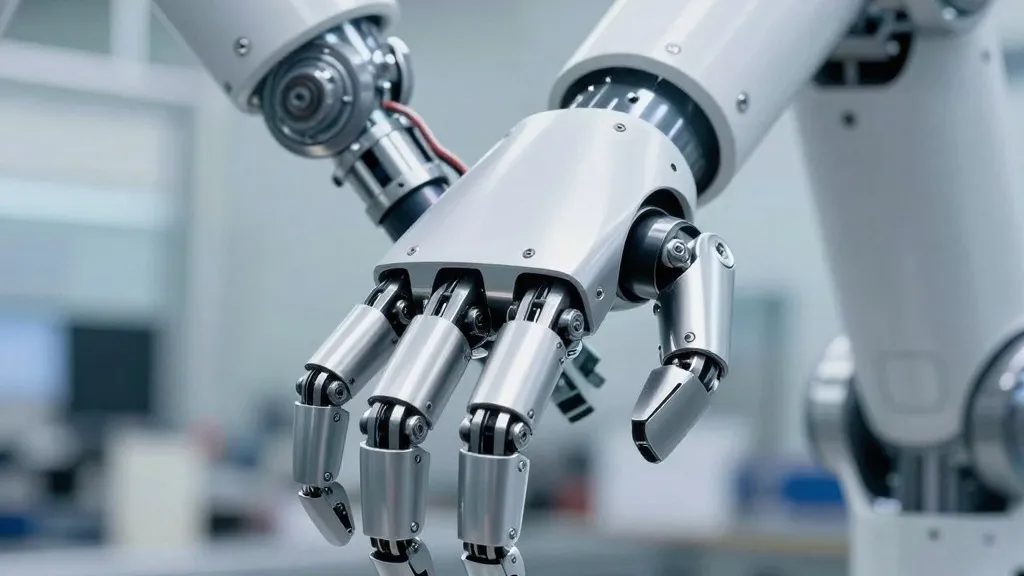
The primary hardware challenge identified is the robot's hand. A Tesla engineer noted that the hand, along with custom gears that have reliability concerns, is a difficult area of the design. Musk agreed, explaining that the fingers must be soft enough to handle delicate objects while also being durable enough to withstand constant wear, a problem he noted human skin can solve by healing.
On the software side, Tesla is still working through issues with its AI architecture. Unlike its vehicles, which collect data from a large fleet to train their Full Self-Driving software, Tesla does not have a large number of robots generating data. To address this, the company plans to build between 10,000 and 20,000 Optimus units for an internal training program called Optimus Academy, where they will practice tasks. Additionally, a new AI5 chip is slated for integration into Optimus around April 2027.
This is not the first time a delivery date for Optimus has been pushed back. In 2024, Musk stated that high-volume production for other companies was targeted for 2026. The company’s own Q3 shareholder letter now refers to the robots currently being built as the first “production-quality” units, implying that all previous models were prototypes or pre-production versions.
Despite Musk’s assertion that “there is no one that is even close to Tesla” in the general-purpose humanoid robot space, competitors are advancing. XPeng activated an automated production line for its IRON robot in September and plans to begin mass production by the end of 2026, with deliveries starting in the first half of 2027. Boston Dynamics began producing its electric Atlas robot in January and reports that all of its 2026 deployments are already committed.
The core challenges facing Tesla are not unique to the company. The entire industry is grappling with how to build durable hands, ensure robot reliability, and develop AI that can generalize to new tasks. While Tesla may be producing a large number of robots, the timeline for making them useful for external customers has consistently been delayed.
Musk has promised to release a video within a month or two showing Optimus performing tasks that are not pre-programmed. This demonstration is intended to show progress on the AI generalization problem. However, with past timelines for Optimus having slipped repeatedly, the new late-2027 target for deliveries will be watched closely.