10,000 Robots: Tesla Unveils Academy to Train Its Humanoid Fleet
Tesla is deploying a massive internal training program to generate the AI data needed for its Optimus robots to enter commercial service by 2027.
By Aiko Rojas ·
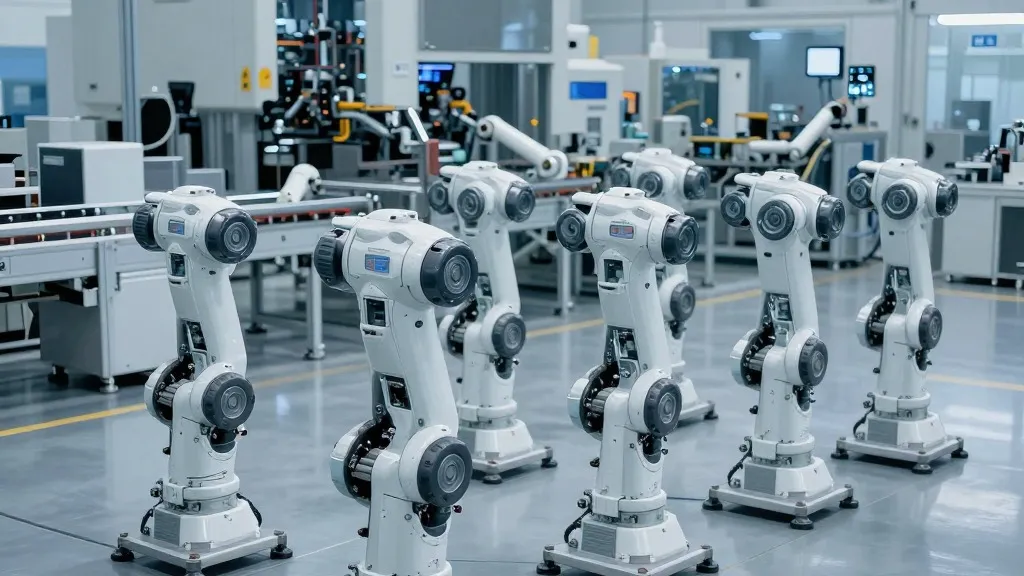
Tesla is preparing to deploy between 10,000 and 20,000 Optimus robots within its own facilities to create a self-learning ecosystem for its humanoid machines. This internal fleet, dubbed the Optimus Academy, serves as a critical workaround for the lack of a large external user base that typically provides training data for autonomous vehicles. The initiative is designed to accelerate the robot's ability to perform complex tasks without relying on preprogrammed movements.
The first production-quality units are now rolling off the high-volume assembly line at Tesla's Fremont factory. The company confirmed in its third-quarter shareholder letter that these specific robots meet the standards required for a commercial product. This marks a significant shift from previous prototypes, as the current manufacturing process has been validated for large-scale commercial deployment. The line occupies space previously used for the Model S and Model X, which were cleared out in just 46 days to make room for this new capacity.
Elon Musk outlined the production trajectory during the Wednesday earnings call, describing the growth as a classic S-curve. He noted that the initial phase will feature a shallow slope before production accelerates. The goal is to ramp up output to approximately 20,000 units per week. Most of the necessary equipment for this volume is already installed in Fremont, setting the stage for a rapid increase in manufacturing throughput over the coming months.
The engineering team is currently focused on refining the robot's artificial intelligence, electromechanical design, and overall reliability. Musk expects this phase of development to conclude by the end of next year. Once complete, Tesla plans to begin delivering Optimus units to external companies. These early adopters will likely use the robots for dangerous, repetitive, and around-the-clock industrial tasks where human labor is less efficient or safe.
A key challenge for the program is data acquisition. Unlike Tesla's autonomous vehicle fleet, which sends real-world driving data from millions of cars, Optimus does not yet have a comparable external fleet. The Optimus Academy addresses this gap by having thousands of robots practice a wide variety of tasks internally. Every unit produced at Fremont contributes to this learning process, feeding new data into the next iteration of the model's AI.
Hardware upgrades are also on the horizon to support this learning curve. Tesla intends to integrate its AI5 chip into the Optimus platform next year. Additionally, a new demonstration video is expected within one or two months, showcasing the robot completing tasks driven by AI rather than scripted routines. Musk contrasted this approach with rival humanoid demos, arguing that scripted motions do not hold up in real-world applications.
The supply chain is also scaling up to support the program. In September, Tesla certified Tuopu, Joyson, and Sanhua as mass production partners for key components. A much larger dedicated factory is currently under construction at Giga Texas, with drone footage showing the steel frame nearing completion. Musk has set a long-term target for that facility to produce 10 million robots per year, indicating the immense scale of the company's ambitions.
Executives noted that Optimus production costs are trending toward the projected manufacturing cost of the Cybercab. This alignment suggests the robot is being engineered for high-volume production from the outset. The robot's hands remain the most difficult design element, a point emphasized at recent events. Significant engineering efforts are currently concentrated on solving the dexterity and reliability challenges associated with these components.