
Apple's iPod Marks Quarter-Century Since Launch
Two decades after Steve Jobs introduced the device that held 1,000 songs in a card-sized frame, the product that once defined personal music has officially ceased production.
By Giulia Liu ·
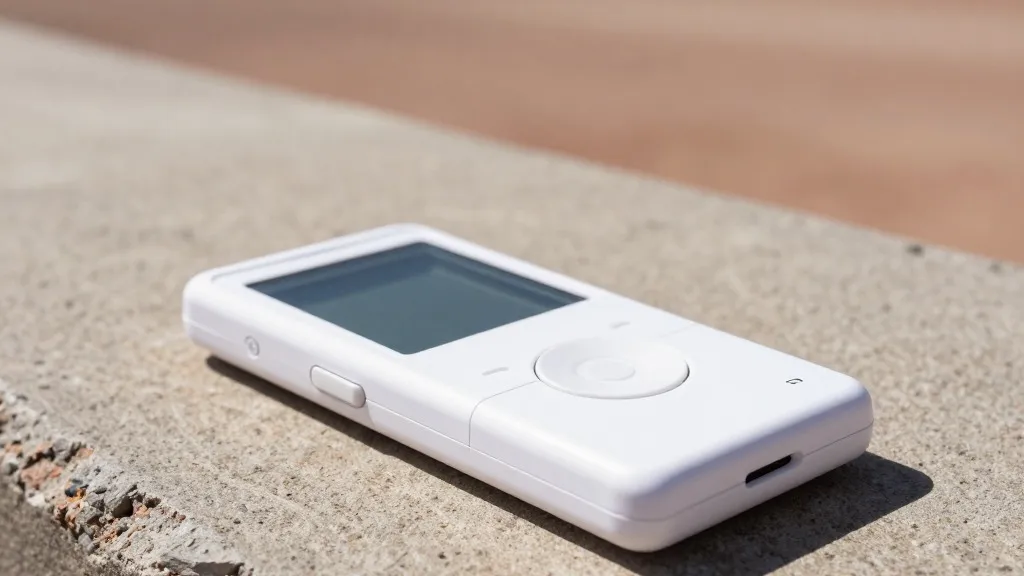
Twenty-five years ago this week, Apple released a pocket-sized device that claimed to hold a user's entire music library for $399, a bold promise that reshaped the consumer electronics market. The original iPod, unveiled by CEO Steve Jobs on October 23, 2001, became a cultural phenomenon that dominated the pre-smartphone era. Its success was built on the simple but compelling premise that digital music could be carried easily, a concept that had eluded previous manufacturers. For a quarter-century, this white plastic gadget has served as a benchmark for portable audio, even as its relevance has slowly diminished with the rise of the smartphone.
The path to the iPod's launch was paved by Apple's earlier recovery from the dot-com bust. By late 2001, the company had moved beyond its beige hardware roots into the Mac OS X era, with strong sales of iMacs and iBooks. Jobs envisioned the Mac as the hub for a digital lifestyle, connecting cameras, camcorders, and DVD players. He identified music as a massive, leaderless market and saw a portable player as the ideal entry point, noting that competitors had not yet found the right formula for digital music.
At the time of the announcement, the portable audio landscape was fragmented across four main technologies: CD players, MP3 CDs, flash-based players, and hard drive jukeboxes. Apple chose the hard drive approach, leveraging Toshiba's new 1.8-inch ultra-compact drive that was just 0.2 inches thick. This component allowed the device to be sized like a standard deck of cards, measuring 2.4 by 4 by 0.78 inches and weighing only 6.5 ounces. Jobs emphasized that it was lighter than most cell phones of that era, a significant advantage for a device intended to be carried everywhere.
The device's 5GB storage capacity was marketed as the equivalent of 1,000 songs, specifically calculated as 1,000 typical pop tracks encoded at 160Kbps. This capacity was the headline feature, designed to convince consumers that they could leave their CDs at home. The player supported the dominant audio formats of the day, including MP3, WAV, and AIFF, while offering CD-quality sound. The combination of high capacity and small form factor was the core innovation that differentiated it from existing options.
Connectivity was another area where Apple claimed a distinct advantage. The original iPod used a FireWire 400 connection for both charging and data transfer, a setup that was significantly faster than the USB standards available at the time. Jobs stated that transferring an entire CD worth of music took only five to 10 seconds via FireWire, compared to roughly five minutes for a USB device. Filling the entire 1,000-song library was estimated to take just 10 minutes, a stark contrast to the five hours required for competing USB players. The device also included 20-minute skip protection to handle accidental drops during movement.
The user interface was designed for one-handed operation, featuring a scroll wheel with piezoelectric tactile feedback. This allowed for quick navigation through playlists, artists, or specific songs. The first track demoed during the launch event was 'Building a Mystery' by Sarah McLachlan. The design was described as minimal and durable, with a focus on Apple's traditional ease of use. A rechargeable lithium-polymer battery provided 10 hours of continuous playback and could be recharged to 80% in an hour.
Software integration was a critical component of the launch strategy. iTunes 2 was released on the same day, introducing features like MP3 CD burning and, most importantly, Auto-Sync. This feature ensured that the music library curated on a Mac was automatically synchronized with the iPod whenever the device was connected. The iPod also functioned as a FireWire hard drive, adding utility beyond just music playback. This tight integration between hardware and software created a closed ecosystem that was difficult for competitors to match.
The first iPhone arrived in early 2007, more than five years after the initial iPod launch. For over a decade, the two devices coexisted in Apple's product lineup, though the iPod's importance gradually waned as smartphones became more capable. The last dedicated iPod model, the 7th-generation iPod Touch, was released in May 2019. Although the product line was left without updates for several years, it was not officially discontinued until May 2022, marking the end of an era that began with a simple $399 promise.