Black House Seats Drop by Three Despite Midterm Gains
The incoming Congress will have 60 Black members, a decline offset only by high voter turnout in the South and specific Democratic wins.
By Giulia Liu ·
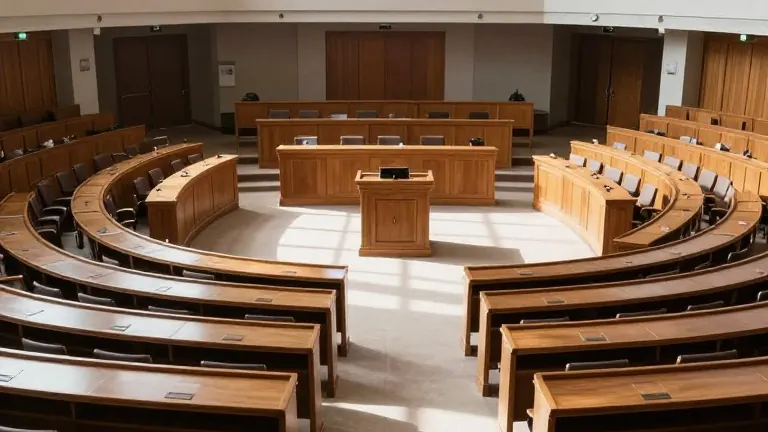
Black representation in the U.S. House of Representatives will decrease next year despite a strong Democratic performance in the recent midterm elections. An analysis by NPR indicates the incoming Congress will include 60 Black members, a drop from 63 in the current chamber. This total includes nonvoting members. The new number is only one seat away from the record low set after the 1876 election.
The decline follows a Supreme Court ruling this year that weakened protections under the Voting Rights Act. The decision allowed Republican-led state legislatures to redraw district lines in ways that favored their party. Alabama’s 2nd Congressional District underwent this process. Shomari Figures, a Black Democrat, won reelection in that district despite the new lines. A lower federal court had previously ruled the new map tainted by intentional race-based discrimination.
Figures joined Congress after the 2024 election as the first Black representative for that specific district. Prior to the midterms, the Supreme Court allowed the Alabama legislature to redraw the district. This move came weeks after the high court issued its decision in Louisiana v. Callais. That ruling reduced protections against racial discrimination in political mapmaking. Figures’ victory relied heavily on high voter turnout among Black voters in the state.
Cliff Albright, co-founder of Black Voters Matter, described the turnout as a Black wave. He noted that voters were motivated by attacks on voting rights and gerrymandering. While new maps in Texas and Florida eliminated some districts represented by Black officials, Democrats won seats in other states. In North Carolina, Don Davis held his seat despite redistricting. Two new Black Democrats, Cyril Jefferson and LaKesha Womack, won districts previously held by white Republicans.
Democrats also gained control of statewide offices in traditional Republican strongholds. In Georgia, the election of Keisha Lance Bottoms as governor lowered the immediate threat of redistricting. Outgoing Republican Governor Brian Kemp announced last week that he would not call a special session on redistricting before handing over power in January. Bottoms is set to become the country’s first Black woman elected governor.
Experts warn that the current redistricting rush was limited because the Supreme Court ruling came late in the cycle. Dedrick Asante-Muhammad of the Joint Center for Political and Economic Studies said the greatest reaction to the ruling will occur in 2028 and 2030. Janai Nelson of the Legal Defense Fund noted that state legislatures, city councils, and school boards have not yet faced the full impact of the new rules. She expects the effects to reach those local offices as maps are redrawn.
Black representation in the U.S. Senate is rising. The number of Black senators in the new Congress will reach a historic high of seven. This group includes Juliana Stratton from Illinois and Scott Colom from Mississippi. Colom will be the first Black senator from Mississippi since the Reconstruction era. These gains contrast with the projected loss of seats in the House.