Zambia's mining sector sees billions in investment amid debate over local benefits
As Zambia attracts major foreign capital to boost copper production, questions persist regarding worker conditions, environmental risks, and the extent of domestic economic gains.
By News Media House Staff ·
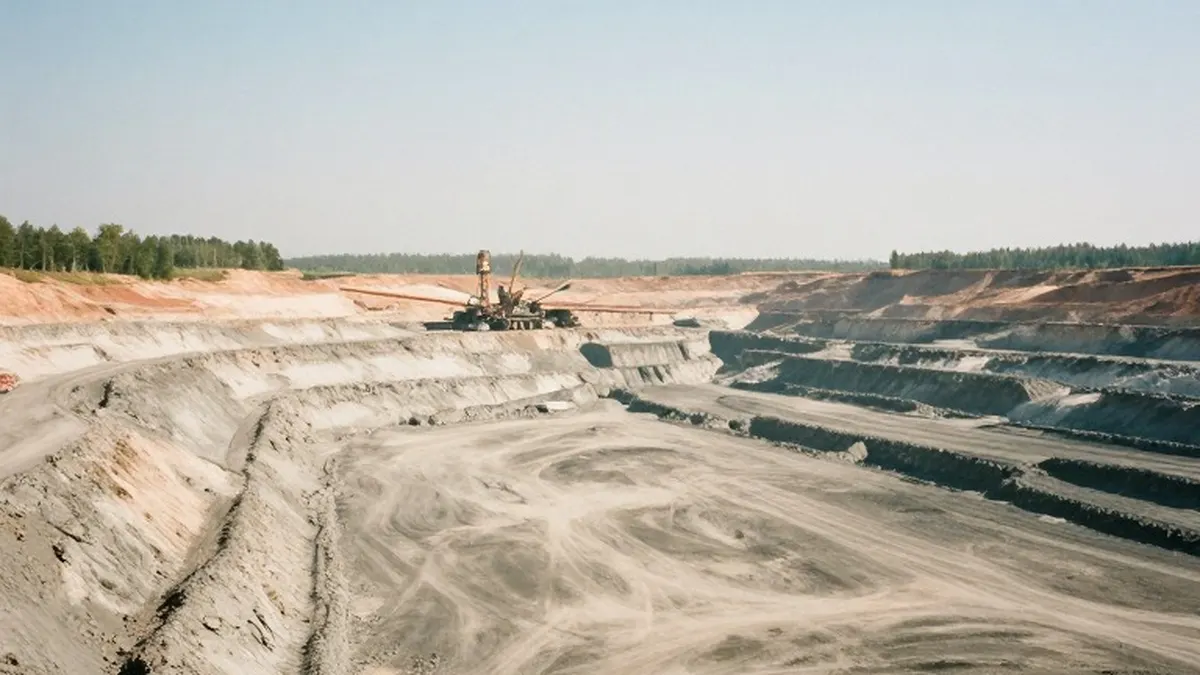
Zambia is drawing billions of dollars in mining investment as it aims to become a key supplier of minerals essential for the global energy transition. President Hakainde Hichilema stated that over $12 billion has been invested in the sector since 2022. This surge in capital is prompting growing questions about whether ordinary Zambians are reaping the rewards of the country’s expanding mineral wealth.
Major investors in the region include Canadian firms First Quantum Minerals and Barrick Mining Corporation, alongside India’s Vedanta Resources and China’s Nonferrous Metal Mining Group. Abu Dhabi-based International Resources Holding has also become a significant player after committing $1.1 billion to recapitalize Mopani Copper Mines. This move granted IRH a 51 percent stake in the operation, while the state-owned ZCCM Investments Holdings retained the remaining 49 percent.
To attract further confidence, the government has implemented tax incentives and a more stable fiscal framework. This shift follows years of frequent policy changes under the former Patriotic Front administration, which governed from 2011 to 2021. Additionally, the Ministry of Mines and Minerals Development reported that a nationwide high-resolution aerial geophysical survey is approximately 98 percent complete. This initiative aims to identify new mineral deposits and improve geological data.
The government has set an ambitious goal to triple annual copper production from less than 1 million tonnes to 3 million tonnes by 2031. President Hichilema compared this potential growth to the United Arab Emirates' economic transformation through oil and gas. He emphasized that Zambia possesses substantial reserves of copper, cobalt, nickel, lithium, manganese, and rare earth metals that can benefit its population.
Beyond raw extraction, Zambia is pushing for greater value addition within the country. Historically, the nation exported copper cathodes to industrialized markets. Now, the government seeks to develop domestic processing and manufacturing capabilities. Zambia and the Democratic Republic of the Congo are also exploring a partnership with South Africa to establish an electric vehicle battery manufacturing industry, leveraging South Africa’s advanced motor industry with African mineral inputs.
Despite the influx of foreign capital, trade unions report that local workers have not yet seen significant improvements in their conditions. Stephen Mwaanga, secretary of the National Union of Miners and Allied Workers, noted that employment conditions remain unchanged despite rising copper prices. He attributed elevated production costs to higher fuel prices linked to the US-Israel war on Iran and its impact on traffic through the Strait of Hormuz.
The mining sector also faces challenges from regional drought conditions associated with El Nino. These dry spells strain electricity supplies, a critical issue for Zambia given its heavy reliance on hydropower. Reduced water levels have forced the country to seek electricity imports and alternative power sources to sustain the industry’s expansion.
Environmental concerns have intensified as mining operations expand. In February 2025, a structural failure at a tailings dam operated by Sino-Metals Leach Zambia released acidic waste into the Chambishi Stream. The pollution spread to the Mwambashi and Kafue river systems, affecting water quality and the livelihoods of local communities. A subsequent assessment by the Zambia Environmental Management Agency documented the ecological damage, highlighting the need for stronger regulatory oversight.
To ensure more economic benefits remain within Zambia, the government introduced local-content regulations. Mining companies are now required to allocate at least 20 percent of their annual procurement budgets for core goods and services to local suppliers in 2026. This threshold is scheduled to increase to 25 percent after one year, with further hikes planned to strengthen indigenous businesses.
Human rights defender Eugene Mulenga warned that the drive for production must not come at the expense of communities dependent on the environment. He observed that farmers and residents near mining sites are increasingly affected by the activity. As Zambia positions itself as a vital supplier for the energy transition, the central challenge is ensuring that this investment boom translates into tangible improvements for citizens and workers alike.
Originally published by News Media House