Jury Convicts Man in 2025 Palisades Fire That Killed 12
Jonathan Rinderknecht faces a mandatory minimum of five years in federal prison after being found guilty of arson related to the wildfire.
By Giulia Liu ·
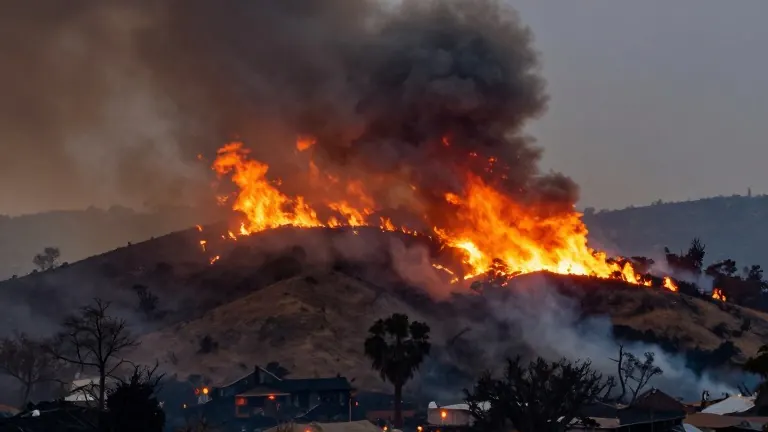
Jonathan Rinderknecht, 30, was found guilty on Friday of federal arson charges connected to the Palisades Fire, a 2025 wildfire that killed 12 people and destroyed neighborhoods in Los Angeles and Malibu.
The jury convicted him of destruction of property by means of fire and arson. The verdict came on the third day of deliberations. Rinderknecht pleaded not guilty to both counts. The scope of the first charge was narrowed to the initial Jan. 1, 2025, blaze, known as the Lachman Fire, which burned undetected in root systems before flaring up on Jan. 7 to become one of California's most destructive wildfires.
This is the second federal trial for Rinderknecht. His first jury deadlocked 10 to 2 in favor of acquittal after a two-week trial in June 2026. Prosecutors filed a new indictment for the retrial, dropping a third charge of timber set afire. Bill Essayli, the top federal prosecutor in Los Angeles, stated he believed the first jury acted improperly by considering matters not presented as evidence during the trial.
In the retrial, prosecutors presented a tightly organized case focused on digital forensic data, expert testimony, and Rinderknecht's state of mind. They relied on photographs showing his car parked at the base of a trail leading to the fire's origin and cellphone tower data tracking his movement. Fire detection camera images established the time window of ignition. Experts eliminated other potential sources, such as fireworks. Assistant U.S. Attorney Mark Williams said Rinderknecht was "mad at everything, and frustrated" in the hours leading up to the fire. Witnesses described erratic behavior, and prosecutors noted Rinderknecht called 911 more than a dozen times while walking down the hill. He also asked ChatGPT if he was at fault for lighting a fire with his cigarettes, a question prosecutors said was part of an alibi he was constructing.
Defense attorney Steve Haney argued the fire's origin was unproven because the area remained publicly accessible until the Palisades Fire began. He called a retired U.S. Forest Service fire investigator as an expert witness who disputed the government's conclusion on the origin area. Prosecutors accused the expert of perjury over undisclosed records, though the judge rejected the request to strike his testimony. Haney also pointed to a neighbor's testimony about teenagers running away from the trailhead and suggested fireworks ignited the blaze, despite prosecutors noting no fireworks appeared in thousands of camera images from that evening.
Cameron, identified as Juror No. 3, said he was the only juror who felt Rinderknecht was not guilty at the start of deliberations. He cited concerns about a technical review by a defense expert that argued the government identified the wrong origin area. Cameron said Rinderknecht's own testimony was the strongest evidence for a guilty verdict, specifically because the defendant claimed he was up on the hill, did not smell smoke, and did not see fireworks, while no one else was present.
Rinderknecht is scheduled for sentencing on March 17, 2027. Each count carries a mandatory minimum sentence of five years and a maximum of 20 years in federal prison. Essayli called the verdict a "testament of the hard work" his team put into the case. Haney said in a statement that his team was disappointed but respected the process, adding they would review all options for an appeal at the right time.
Rinderknecht showed little apparent reaction to the verdict. He hugged his attorneys before leaving the courtroom.