14% of 911 Dispatchers Now Confront AI-Faked Emergency Calls
A joint report from public safety groups reveals that nearly one in seven dispatchers have handled swatting calls using synthetic audio, forcing rapid changes to verification protocols.
By Giulia Liu ·
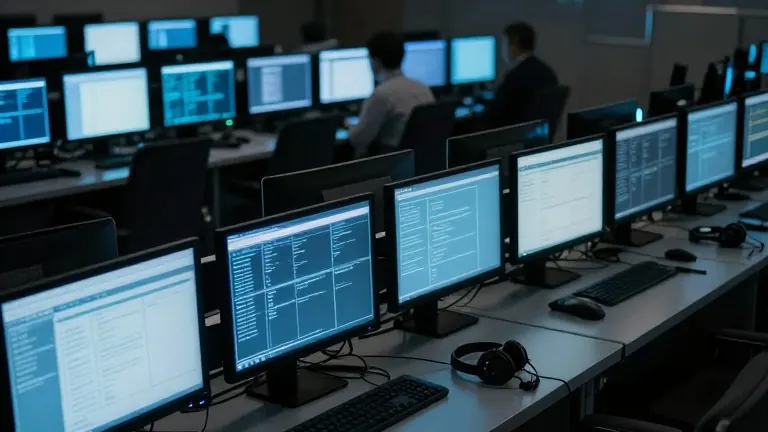
Ninety-one percent of 911 dispatchers rely on their ears to verify threats, but a new report indicates that artificial intelligence is closing the gap between real and synthetic voices. A study released in June by APCO International and the Public Safety Threat Alliance found that 14% of dispatchers reported handling swatting calls that utilized AI tools. These hoax calls, which often involve false bomb threats or reports of active shooters, are designed to trigger a large police response. The data comes from more than 760 responses collected from public safety communication officials.
The problem has become tangible in local communities. In August, Wheatland Union High School in Yuba County, California, received an anonymous bomb threat overnight. Police responded immediately, and classes were canceled for the day. No bomb was found, and no injuries were reported. Local media outlet FOX40 noted that the caller used an AI-generated voice. The threat demanded 15,000 dollars in a container box. Authorities linked the incident to a series of similar hoax calls targeting schools across the country during the summer.
Mel Maier, the CEO and executive director of APCO International, said the situation is worsening. He noted that synthetic voices used to be easy to identify, but current tools produce natural-sounding speech. Maier explained that these systems can now insert filler words like um or uh to mimic human hesitation. This makes it difficult for dispatchers to distinguish a fake call from a genuine emergency.
The cost of creating these fakes has dropped significantly. Brandon May, an assistant professor of forensic psychology at the Florida Institute of Technology, said that tools from companies like ElevenLabs are cheap and widely available. May stated that he could clone his own voice for less than 20 dollars. He added that users can adjust intonation, pitch, and pauses with ease. He also mentioned that swatters are using AI to generate background sounds such as gunfire or screaming.
May said that even he finds it hard to detect these fakes. He described the challenge for dispatchers who must make high-stakes decisions in 60 to 90 seconds. In that short window, he said it is nearly impossible to determine if the audio is synthetic. This pressure falls on workers who must decide whether to send police resources to a location immediately.
APCO is rolling out new training programs to help dispatchers handle these calls. The goal is to create criteria-based interrogations that ask specific questions. Maier said these questions require a level of detail that an AI cannot easily find in public databases or guess. This approach aims to force the caller to provide information that only a real person would know.
Despite the rising use of AI, Maier and May agree that dispatchers will continue to treat calls as real. They said resources will be sent to any call for help, even if the dispatcher strongly believes the audio is fake. This policy ensures that real threats are not missed due to technical uncertainty.